

Acne & Acne Scars Revision
TwinLight Laser Acne & Acne Scars Treatment fast and simple IMA solution for clear skin
- Safe and effective
- No medication
- Controlled, accurate and precise
- Improves skin texture and tone
- Suitable for larger and smaller areas
- Fast and gentle

Understanding Acne & Acne Scars
What Is Acne?
Acne is a common skin condition caused when hair follicles become clogged with oil and dead skin cells. It can appear as whiteheads, blackheads, pimples or cysts or nodules. These often occur due to hormonal changes, excess sebum, oil production and inflammation.
The more severe or prolonged the inflammation, the higher the risk of scarring.
What is TwinLight Laser Acne & Acne Scars Tx?
Laser treatment of Active Acne reduces acne inflammation by photoselective absorption and heating of overactive sebaceous glands. The power of an Nd:YAG laser is used to accelerate the healing process and to reduce the possibility of developing new acne inflammation.
Laser treatment of Acne Scars is based on the precise and gentle skin resurfacing procedure where the Er:YAG laser is absorbed by the top micro-layers of the skin to vaporize scarred skin and stimulate the production of new collagen in the dermis.
Best clinical results are obtained by employing two complementary wavelengths of near infrared lasers (Er:YAG and Nd:YAG – TwinLight Tx).
Acne and scars and how they form
At MediDermic we use Fotona’s unique SMOOTH® mode laser system. The heat from the laser stimulates collagen remodelling and initiates neocollagenesis in the dermis. The result is an overall improvement of wrinkles, laxity and elasticity in the treatment areas around the eyes.
Fotona laser acne and scar treatment: Different types of pimples occur when dead skin cells and fat accumulate in the pores of the skin along with bacteria. This causes swelling and sores.
Your body has its own mechanism for dealing with this damage and tries to solve this problem by forming more collagen.
This can cause bumps on the skin, such as excess flesh (keloid scars) or hypertrophic scars, which can eventually lead to scars. In other words, you see acne scars when your skin is healing.
Acne scars are divided into three categories based on the amount of collagen your skin has produced or lost:
- Atrophic scars
- Keloid scars
- Hypertrophic scars
Atrophic scars
This type of scar is formed when tissue is lost during the healing process. Atrophic causes skin depression.
Icepick-scars (deep scars), rolling scars (usually M-shaped), boxcar scars (U-shaped and wide) are the three most common types of atrophic scars.
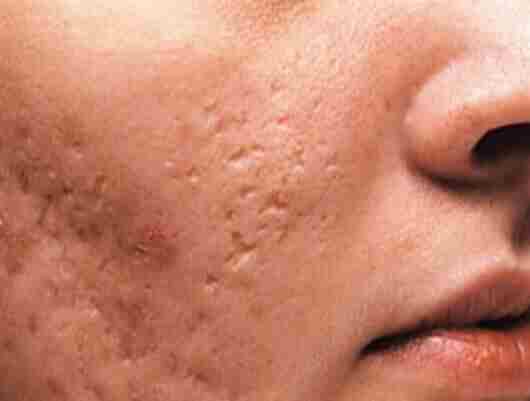
Atrophic scars
This type of scar is formed when tissue is lost during the healing process. Atrophic causes skin depression.
Icepick-scars (deep scars), rolling scars (usually M-shaped), boxcar scars (U-shaped and wide) are the three most common types of atrophic scars.
Keloid and hypertrophic scars
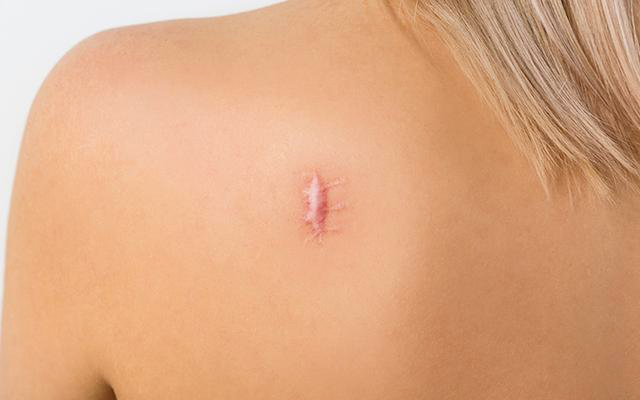
Your skin gets this type of scar when it produces too much collagen, causing bumps on the surface of the skin. There is a lot of collagen in the pimples. Hypertrophic scars are bumps that form on damaged skin.
They are thick and broad and usually form during the skin repair process. Keloids, on the other hand, are reddish-purple bumps that can spread to the affected area and involve more areas.
Know More about Fotona Active & Acne Scar Revision
How Fotona Treats Acne & Acne Scars?
Fotona is an advanced laser system that uses dual wavelengths to target both active acne and scarring, with minimal downtime.
For Active Acne:
Nd:YAG laser penetrates deep into the skin to:
- Kill acne-causing bacteria
- Reduce inflammation
- Shrink sebaceous (oil) glands
For Acne Scars:
Er:YAG laser resurfaces the skin by:
- Gently removing damaged outer layers
- Stimulating new collagen formation
- Smoothing out scar texture and tone
What are the Benefits of Fotona:
- Non-invasive, safe for all skin types
- No harsh chemicals or medications
- Minimal discomfort and downtime
- Long-term improvement with a series of treatments
What to Expect
- Treatment Time: 30–60 minutes
- Recovery: Mild redness for 1–3 days
- Results: Gradual improvement over weeks; optimal results with multiple sessions
Keloid or hypertrophic are common in people with dark skin. These scars appear more on the trunk. Different methods are used to treat these acne scars.
Various devices such as RF needling, fractional, microneedling, microdermabrasion are used to remove scarring. Read similar article
Know More
Keloid or hypertrophic scars are more common in people with dark skin. These scars appear more on the trunk. Different methods are used to treat these acne scars. For example, the subsection method is used to separate these two layers of epidermis and dermis.
Various devices such as RF needling, fractional co2 laser, microneedling, microdermabrasion, and mesotherapy are used to remove scarring. Read similar article:
How does a laser scar work?
Lasers are strong monochromatic lights that are limited to a narrow wavelength range.
These monotonous lights shine on your skin to stimulate skin fibroblasts (cells in the skin that are able to form connective tissue and facilitate wound healing).
These fibroblasts regenerate collagen and elastin, which are lost due to scar formation.
Fotona laser
The fotona laser kills bacteria because the laser has an antiseptic effect, and ultimately the photon laser reduces the inflammation of acne (pimples).
The number of fotona laser sessions varies depending on the severity and extent of the acne and varies from three to five sessions.
But why does the fotona laser work wonders in treating acne scars?
The fotona laser has two wavelengths, ND Yag and Erbium Yag.
The first wavelength causes a strong shock to the skin cells to stimulate the growth and deep regeneration of the cellulose, and the second wavelength causes tiny holes to form from the surface of the skin to the middle layer, the dermis.
Miraculously begin to grow, repair and regenerate.
Of course, in addition to using these lasers to increase greater effectiveness at the same time, we can also get help from collagen-making creams and collagen-making pills, and thus achieve better results.